AI Angel builds a non-red AI image-signal-processing (ISP) and edge-AI platform for drones — edge denoising and edge-AI scene understanding today, with native wide dynamic range (DOL HDR) on the roadmap, and verified over-the-air model updates. Proven on FPGA today, advancing to a dedicated 28 nm AI ISP chip. With partner JANMAN Precision, the rugged airframe and the AI brain arrive as one turnkey package.
The camera must survive the field — and it must see through haze, glare and darkness and decide on board, at flight speed, without your imagery ever leaving the aircraft.
High-altitude haze, backlight, 0.1 lux nights and 150 km/h motion blur defeat ordinary cameras. Denoise and dehaze are computed on-device; adaptive wide dynamic range and motion compensation are roadmap items.
Cloud round-trips add delay and leak data; drones are power- and weight-limited. On-board inference keeps the data on the aircraft, at low power.
AI Angel (CTE Group) provides the intelligence; JANMAN Precision provides the structure. Together, one complete, fully non-Chinese package.
Software and hardware from two different industries, yes — but you don't integrate them yourself. You buy a pre-matched unit from a single Taiwanese partnership: one purchase, one integration, one point of accountability.
The rugged airframe, the edge-AI brain and the OTA service arrive as a single package — no juggling a separate hardware supplier and a software supplier, or making them agree.
Enclosure, sensor mount, FPGA and AI models are matched and validated together. You receive a working unit — not an integration project to run yourself.
A single partnership owns the whole stack — one warranty, one SLA, one contact. If anything needs attention, there's no finger-pointing between a hardware and a software vendor.
Hardware and silicon are both non-Chinese, sourced through one trusted partnership — simpler compliance and procurement for government and critical-infrastructure buyers.
A short cinematic film — non-red drone AI, from the edge to the sky.
Eight tightly-integrated capability areas turn a raw, noisy sensor feed into clean, decision-ready imagery — efficient enough to run on the edge.
ISP pipeline and memory subsystem in FPGA, co-designed with a separate edge AI accelerator across a standard interface; deterministic data paths, configurable pipeline.
Spatial/temporal denoise, dehaze, local tone mapping and colour processing shipping today; multi-exposure HDR and motion compensation on the roadmap.
Lightweight CNNs, INT8 quantisation, knowledge distillation and hardware-aware training — big-model accuracy at edge cost.
Dedicated ISP accelerators — feature detection, motion-estimation and filter arrays, colour-transform engines.
Hierarchical cache, DMA and bandwidth optimisation; DVFS, clock-gating and power-domain design targeting < 2.5 W on 28 nm (roadmap · pre-silicon estimate).
Every update package is verified twice — publisher hash plus on-device checksum; any mismatch is rejected and rolled back automatically. Model IP is protected by a three-layer scheme: contract terms, per-customer watermarking and model freshness — the continuously-improving loop devalues any static copy. Inference runs offline by design.
Image quality, edge AI and secure updates are co-designed as a single system. The drone stays fully autonomous in the field; the cloud keeps the whole fleet improving over the air.
An AI agent continuously watches live quality metrics — PSNR, SSIM, latency, accuracy — and decides on its own when to push, upgrade or roll back a model. No truck-roll, no downtime.
Version control, A/B deployment, knowledge-distillation training and a live dashboard across the entire fleet.
Raw imagery never leaves a device. Federated learning — sharing only de-identified gradients — and a tamper-evident ledger for deployment audit are roadmap items.
Multi-camera RAW feed streamed straight into the FPGA over MIPI CSI-2 — no host PC in the loop.
A full 9-stage ISP pipeline runs entirely in FPGA fabric with deterministic timing — ISP-block latency on the order of 15 µs — and boots without a host. Measured drop-free at 1920×1080 @ 60 fps. End-to-end system latency is counted in frames and is defined jointly during technical integration. The AI perception layer runs on a dedicated accelerator, decoupled from the FPGA bitstream and updatable over the air — the proprietary ISP core that anchors our roadmap to a dedicated AI ISP chip.
A dedicated flight controller drives the FPGA and manages A/B firmware: it evaluates each new model against the quality metrics, switches atomically with image-output freeze far below the acceptance limit, and rolls back automatically if anything regresses — the drone keeps flying through every update.
FPGA bitstream updates are two-phase — trial, then commit. A trial image is verified in a separate slot; power loss during trial automatically reverts to the current version. If a commit write is interrupted, the device boots the write-protected golden image. Built on the FPGA vendor’s native configuration architecture — an update can never leave the vehicle without vision.
Demonstrated results, measured on the FPGA platform — the same figures we accept a system against.
Every performance claim on this site is labelled at one of three levels: Measured (with a measurement record), Derived (with a stated calculation basis), or Roadmap (design frozen, not yet built). At acceptance, every number can be re-measured on site by your team.
Same source footage, side by side. Our distilled denoising model reduces spatial noise by 45% and temporal noise by 49%, with no loss of edge detail.
The model is KB-scale in INT8 — small enough to run on the attached edge NPU alongside the FPGA ISP pipeline, delivered over 4G in under a second and swappable over the air.
Denoise figures are offline-validated on identical material (600 frames); on-device measurement on the edge NPU is reported in the Performance section.
One rugged platform, a decade of upgrades. You pay for the hardware once; the intelligence keeps evolving through verified OTA — no forced refresh, no downtime.
Rugged JANMAN airframe + FPGA edge-AI. One capital investment, yours to keep — no per-seat or per-frame licence.
New denoising and perception models pushed over the air — integrity-verified, atomic A/B switch, automatic rollback on failure — as often as we improve them.
The same drones get sharper each update — better low-light, new capabilities — without ever touching the hardware.
A full decade of upgrades on one platform — no hardware refresh cycle. The drone you buy today keeps getting smarter.
The most common question about over-the-air AI is whether it means your imagery leaves the site. It doesn't. "Over the air" is about updates arriving — not footage departing. Both your raw imagery and your training data stay inside your environment.
An OTA update is model weights pushed to the aircraft — integrity-verified on arrival, atomic A/B switch, automatic rollback. No customer data has to leave for an update to happen.
Training runs inside your environment (on-prem), so your training data is never uploaded. Federated fleet learning — sharing only de-identified gradients, encrypted math and never pictures, and only with your consent — is a roadmap item.
For the highest-security sites, a fully offline deployment sends nothing — not even gradients. The model is improved off-site and delivered to you as scheduled updates, each verified on-device before it takes effect, and logged.
For critical infrastructure and national programmes, the supply chain and the data both matter.
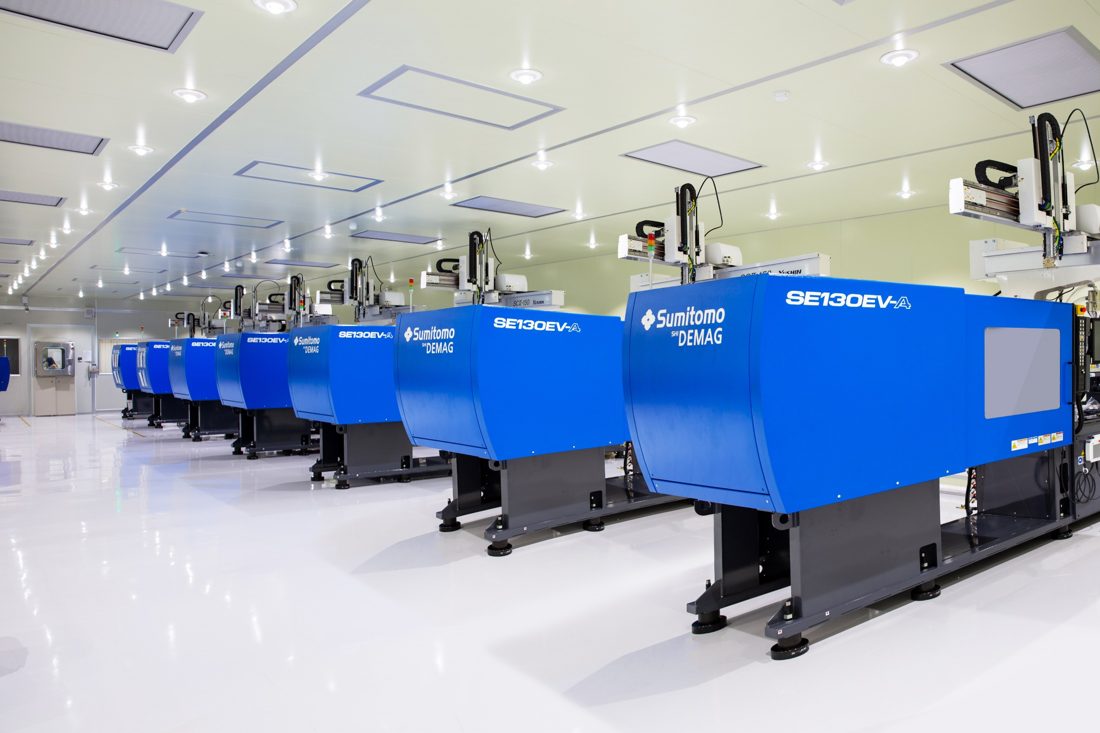
The rugged airframe, enclosure and precision mechanics that keep the AI stable in the field — delivered as one-stop, mould-to-assembly production from a vertically integrated Taiwanese manufacturer.
Medical-grade PEEK / PPSU / PEI moulding — high-temperature, radiation-resistant and low-outgassing. "Plastic-for-metal" lightweighting that keeps airframe rigidity while cutting weight.
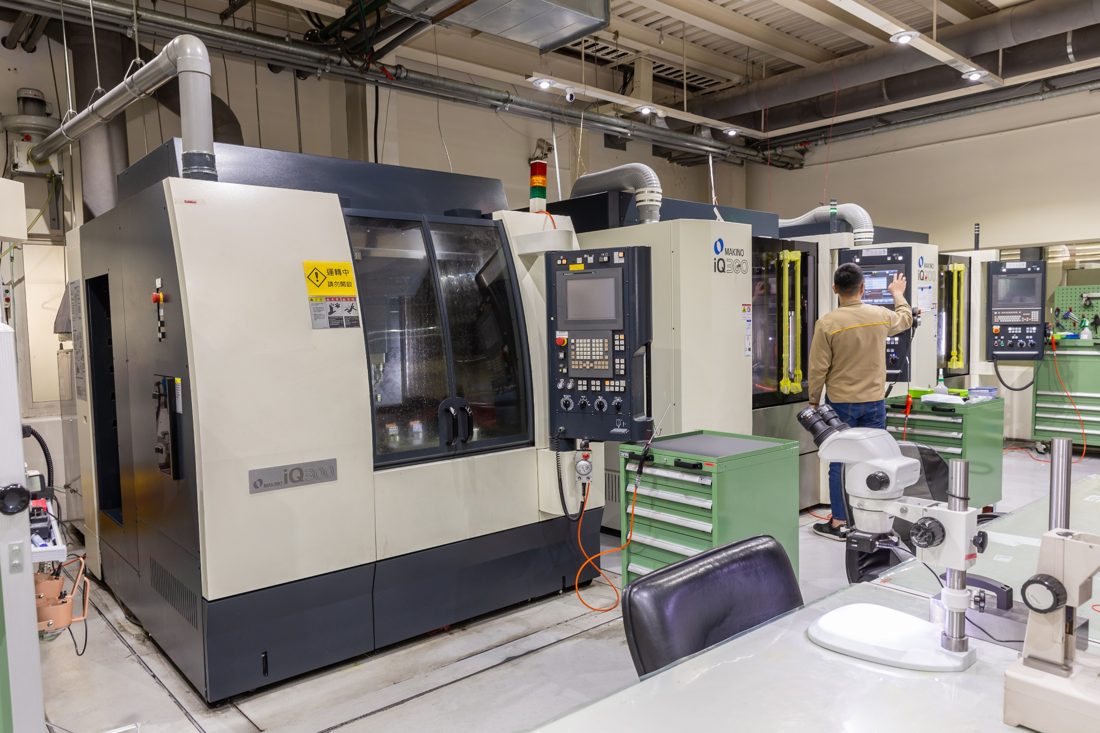
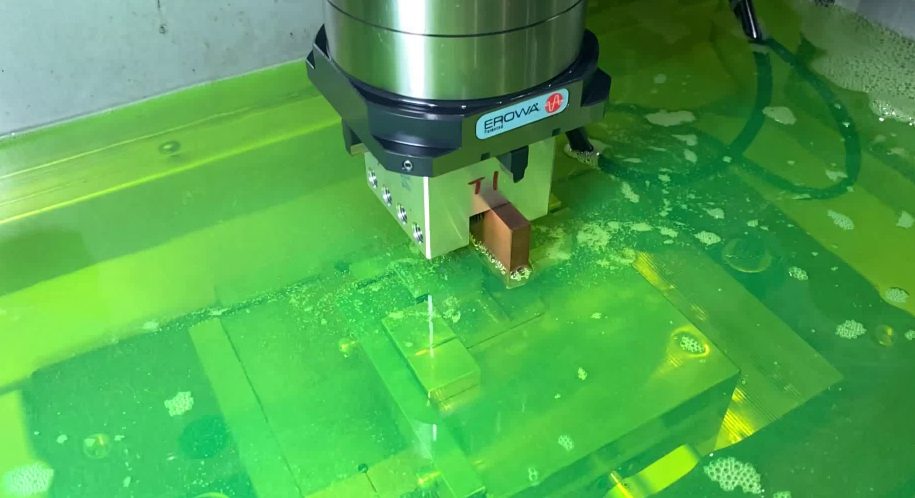
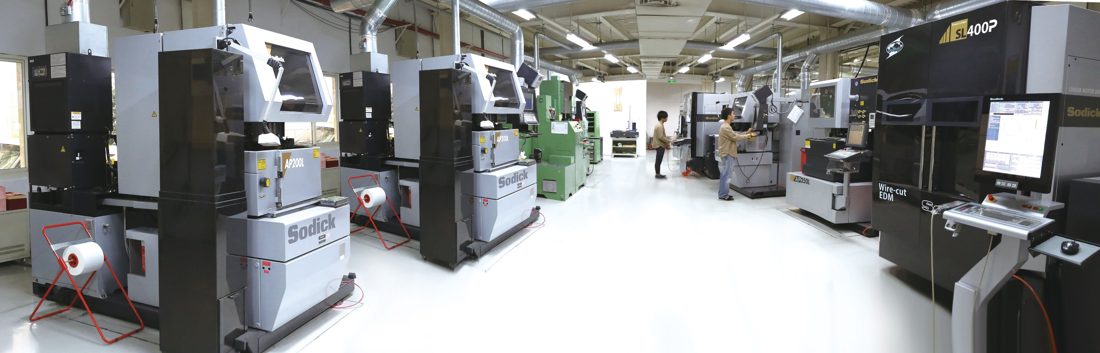
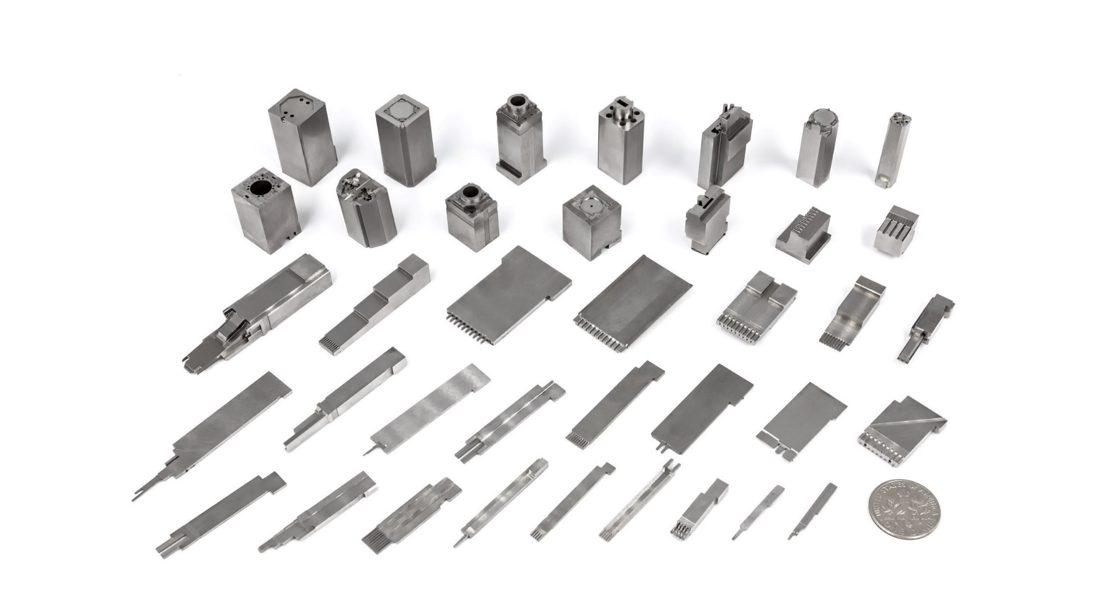
Sodick wire-EDM and Makino high-speed milling to 0.0005 mm precision — for gimbals, camera mounts and precision actuator mechanisms.
Ultra-fine wire over-moulding (Ø < 0.35 mm) and metal insert-moulding — the core craft behind high-frequency video links, receivers and array-antenna connectors.
ISO Class 7 / 8 cleanroom moulding; ZEISS CMM and NIKON vision metrology delivering full GD&T data-driven inspection reports.
Mould design → mould-flow analysis → injection → metal insert → cleanroom sub-assembly and ESD-protected testing, under one roof.
ISO 9001 / 14001 / 13485 and MoHW GMP; recognised with the Yushan National Brand Award and the Dun & Bradstreet SME Elite Award.
A vertically integrated plant — from mould shop and machining to injection moulding, cleanroom assembly and metrology.
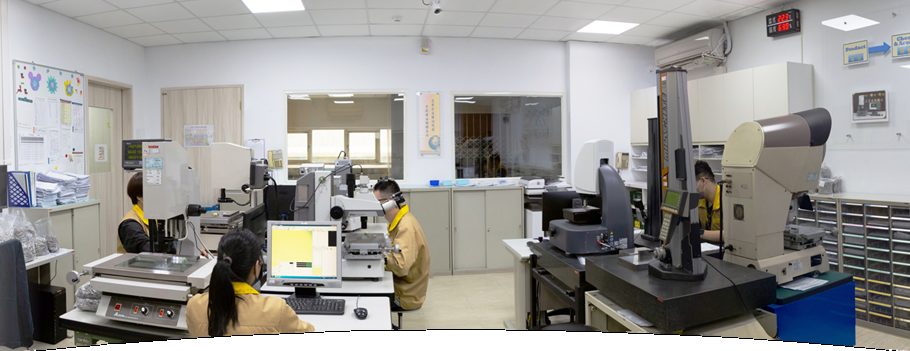
Part of CTE Group (founded 2010, Taipei) with deep heritage in image-signal-processing and camera-module design across mobile, wearable, automotive and security — and ASIC & FPGA imaging experience. AI Angel focuses that expertise on non-red drone edge-AI, OTA and a dedicated AI ISP chip, delivered ODM/OEM with an open SDK to empower local manufacturing.
An aerospace-grade precision manufacturer founded in 1985, with NT$200 M capital, ~136 specialists and a LEED-certified, vertically integrated factory. Core strengths: super-engineering-plastic (PEEK / PPSU / PEI) moulding, micron-level machining and one-stop mould-to-assembly production — backed by 56 patents, ISO 9001 / 14001 / 13485 & MoHW GMP, and the Yushan National Brand Award. JANMAN provides the rugged structure that keeps the optics stable in the field.
Tell us your use case and we'll come back with a concrete next step — a demo, a Sample-Kit pilot, or an ODM/OEM discussion.
Benison.pin@aiangel-ctegroup.com.tw
benison.pin@gmail.com
AI Angel · CTE Group (晶芯智創), Taiwan
in partnership with JANMAN Precision (建名精密)
Benison Pin (賓振呈) — CTO
Website